The Road Ends Here: A Gonja Elder on Ndewura Jakpa's Last Campaign
A Gonja elder tells Twum Dufe Gabriel how the conqueror Ndewura Jakpa built a kingdom by following the road, and how a pebble tied to an arrow ended his march into the forest.
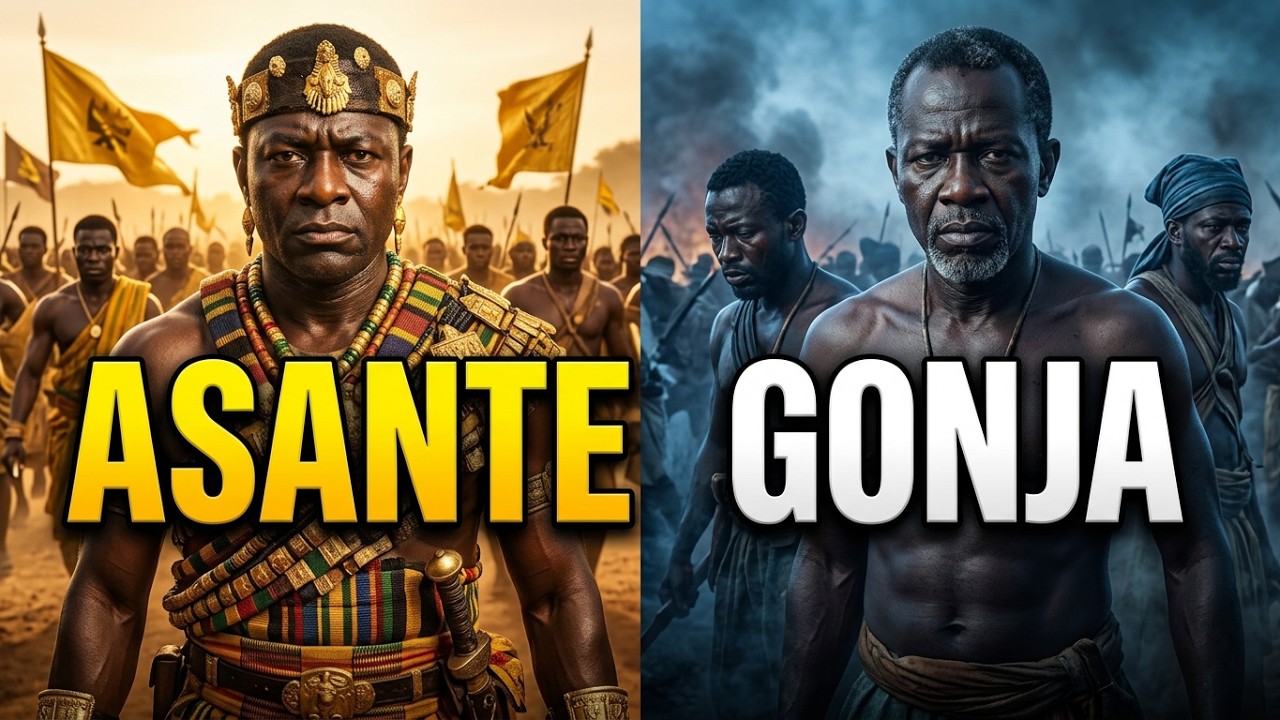
In Gonja country in northern Ghana, Twum Dufe Gabriel sits down with an elder who describes himself as one of the “old ones”, a keeper of a history that has been carried by word of mouth rather than on paper. The subject is Ndewura Jakpa, the warrior remembered as the founder of the Gonja kingdom, and the campaign that brought his conquests to a halt. What follows is the elder’s account, offered as his people’s tradition, and at several points deliberately at odds with what he says the history books have written.
Historians generally place Jakpa in the seventeenth century and describe him as a leader of Mande origin who came south from the lands of the old Mali empire. The elder’s telling agrees on the origin. Jakpa, he says, came from an empire, and an empire was the only form of rule he knew.
The first settlers and the fear of water
The elder begins well before Jakpa. The Guan, he says, were the first settlers in Ghana, and the Gonja are Guan. By his reckoning the Guan are more numerous than any other people in the country, scattered into several branches during the migration. He divides them by a simple test: those who feared water and those who did not. His own people, he says, feared it. He explains the names of the different branches as short phrases in the Guan tongue, among them one he renders as “we see, we meet”, and he gives the meaning of Gonja itself as something close to “we struggled, and then we had it”.
When Gabriel mentions that he has already visited the Awutu, a Guan people of the coast, and that a historian there told him they had long been on their land without knowing how they came to it, the elder agrees and folds them into the same story of an old dispersal.
The fear of water, in his account, is bound up with the death of Jakpa’s father. Tradition holds that this earlier warrior fought his way along the rivers, conquered the towns on their banks and then died in the water. The elder says there is a canoe at one of the rivers that people commonly attribute to Jakpa; he insists it belonged to the father. When Jakpa arrived, the elder says, he declared that his father had not succeeded by water and that he would take the land instead. From that decision comes a taboo the elder says is still observed: a Gonja king is not to be put in a canoe and carried across a river.
How the road-follower built a kingdom
The name Jakpa is usually explained as a reference to conquest by the spear. The elder rejects this. In his reading the name describes movement: Jakpa was never settled, he followed the road, and because every road leads eventually to a town, every road led him to a conquest. The name, he says, means one who follows the road and conquers.
He adds other praise names. One, Lanta, he translates as a warning that whoever’s house Jakpa entered, he would demolish. Another he glosses as “the defeater”, and a third as “the traveller”. These names, he says, were spoken as compressed phrases, and a listener had to work to unpack them.
The elder also describes Jakpa’s method. He was a commander who knew the strong and weak points of the country and who thought twice before attacking. Rather than storm a town, he would block its farm paths and the paths to its water. A town that prepared for war and came out to fight was defeated. A town that knew it could not fight and came to plead was spared, and Jakpa would leave one of his many sons there to rule. His force, the elder says, numbered more than 500 fighters at a time when a village might hold fewer than twenty people, and each victory persuaded more men that this was a leader worth following. That, he says, is how the Gonja armies grew.
By the elder’s account the people Jakpa met in the north had no kings. They lived under the custodians of the earth shrines, offering animals each year so that the land would be at peace. Jakpa, he says, wanted the whole of what is now Ghana under one king. He also credits Jakpa and his companions with bringing Islam to Ghana. Historians generally hold that Islam first reached the region through Mande-speaking traders, though Gonja tradition does closely associate Jakpa’s conquests with Muslim clerics who travelled with him.
Three clashes with the forest
Having taken the northern half of the country, the elder says, Jakpa turned south towards the Asante. The elder claims that the Asante at that time did not yet know kingship; the established record dates the founding of the Asante kingdom to around 1700, after the period usually assigned to Jakpa, so the forest peoples he would have faced were not yet the later empire. The elder stresses that they were numerous and that they lived in a forest zone the northerners did not understand.
Jakpa did not march alone. The elder says fighters from several peoples went with him, including a group whose name appears to be the Chakosi, whom he calls “playmates” of the Gonja to this day. Twice, he says, the Gonja and their allies attacked. The first time they pushed the forest people back, in a borderland where, he notes, the languages and families of the two sides have since intermarried. The second attack made ground but did not succeed. The allies complained that the forest was not good for them: they did not know its fruits and feared eating poisonous ones. They withdrew.
The third encounter decided the matter. According to the elder, the Asante held consultations and captured some of Jakpa’s men. One was pressed to say how his leader could be defeated and, under force, gave up the secret: guns could not kill Jakpa, and only a pebble could reach him. The pebble, the elder explains, was bound to an arrow and shot from a bow. It struck Jakpa in the ankle. He ordered a withdrawal, telling his followers to fall back on the lands already won and settle them. The allied fighters, the elder says, did not settle in Gonja but moved off to other parts.
“My journey has ended”
Jakpa had left instructions for his death. He was to be buried at Mankuma, which the elder describes as a spiritual place whose people had a covenant with him; it was there that he returned after each campaign to fortify himself before fighting again.
Wounded, he was carried back north. At a town where the party stopped to rest, the elder says, Jakpa announced that he had been moving along a path and that now “my journey has ended”. The town’s name preserves those words. The elder is firm that a popular explanation, that the name means the leg had swollen, is a mistake made by people who did not grasp how Gonja speech compresses a sentence into a name. He explains another place name on the route in the same way, as Jakpa’s promise to rest, fortify himself and return.
A grave, or a vanishing
On the burial the accounts part. Gabriel puts to the elder the version he has heard elsewhere: that Jakpa died on the way to Mankuma, that the body could not be carried further, and that he was buried at Buipe. The elder acknowledges that this is what people are told and what the histories record. His own tradition is different. Jakpa, he says, assigned his followers their places, then vanished, and the spot where he had been seated became the grave. The body, he maintains, was never there to bury.
He goes on to speak of the reach of Gonja land. After wars with the Dagomba, he says, a wise chief argued that the two peoples were brothers and should not fight over land, and the Gonja gave up much of what they held. He still counts Tamale and Savelugu as historically Gonja and sums up the old extent in one line: “We don’t share boundary with anybody.” These are his claims, and the history of those lands is told differently by their neighbours.
He mentions later wars too, one of which he says was led by Kofi Karikari, and the era of Samori and Babatu, but there is not time to pursue them. The real history, he tells Gabriel, needs a long stay and a full book of the wars, the first settlers and the names. Too much of it, he believes, has been written down by people who did not understand that, in his words, “our language is oral”.
Prefer to watch? This article is based on a Journey documentary. Watch the video →
More in Kingdoms & Empires

Kingdoms & Empires
Between the Forest Kingdoms and the Sea: How the Ga of Accra Endured
In Accra, a Ga custodian of tradition tells Twum Dufe Gabriel how his people survived Akwamu conquest and war with Asante, and why Homowo still hoots…

Kingdoms & Empires
Because of War: A Denkyira Account of How Asante Won Its Freedom
At a Denkyira palace, a court historian tells Twum Dufe Gabriel his kingdom's version of the fall of Ntim Gyakari, the rise of Osei Tutu I and the…

Kingdoms & Empires
One Stool, Many Peoples: How the Asante Chose to Become a Nation
Asante began not as a single tribe but as a union of small states under Denkyira's rule. Tradition holds that a golden stool, received on a Friday in…
Discussion 0
No comments yet. Be the first to share a thought.
Join the conversation. Members can comment on every article, video and photo without leaving the site.
Join free Sign in