A Word for Calamity: Slavery and Its Long Shadow over Northern Ghana
Among the rocks of Tengzug, a northern Ghanaian novelist tells Twum Dufe Gabriel how slave raiding emptied whole communities, and why he believes its legacy still shapes the north.
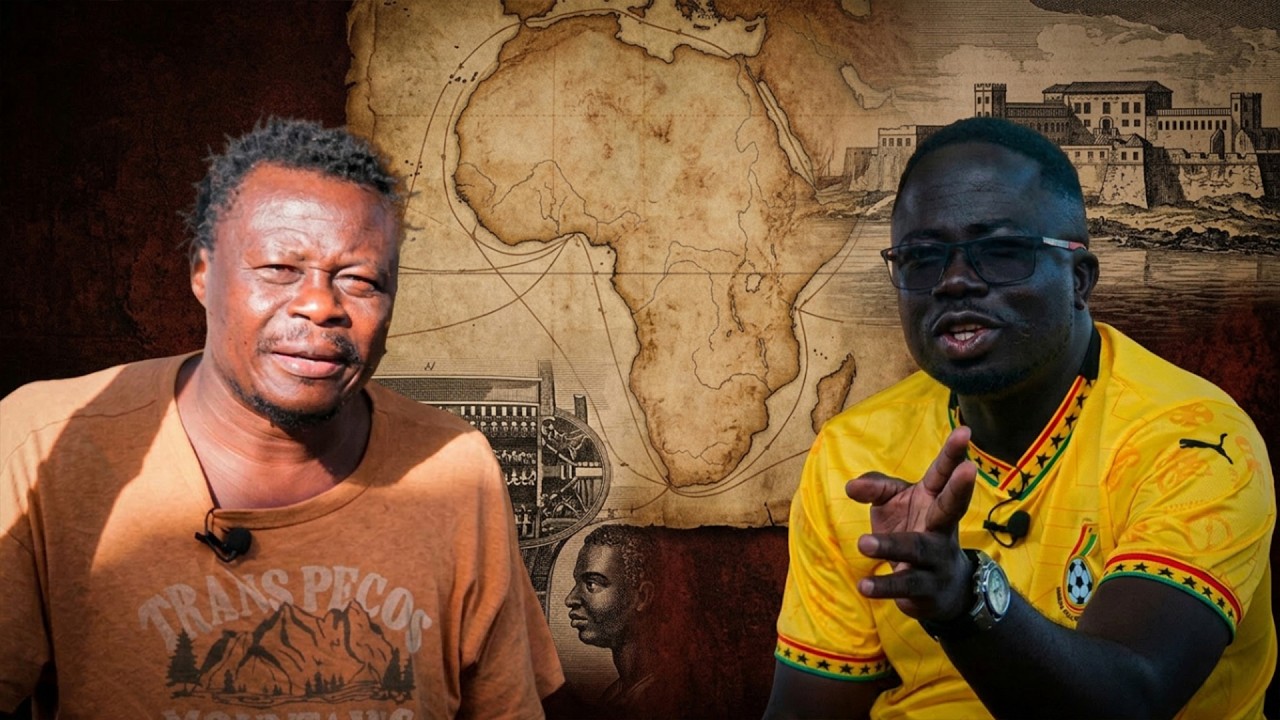
The interview takes place at Tengzug, an old settlement set among the rocky hills of the Talensi area in Ghana's Upper East Region. Twum Dufe Gabriel has come to meet Ishmael, a creative writer and student at the Institute of African Studies, University of Ghana, who has three novels to his name. The newest of them, subtitled Abandoned African Slave, is the reason for the conversation, and the author says he chose the location deliberately: the landscape, in his view, is part of the evidence.
Gabriel opens with a direct question. What single thing has affected the north of Ghana more than any other? Ishmael does not hesitate. Worse than any other disaster, he says, worse even than the north's late entry into formal education, were slavery and the slave trade.
A word for calamity
The novel's title, Ishmael explains, is taken from a word in Dagaare, the language of the Dagaaba of north-western Ghana. He says it is often heard in dirges, the songs of mourning, and that the Wala and the Sisala have borrowed it in their own forms. Its meaning, he says, is calamity: “a situation that you never want to experience again”. It came to be used for slavery, and he suggests it may even have been coined when slave raiding in the north was at its height.
The subject is still raw. Ishmael recounts a recent meeting with the living son of a man who had been captured in the Upper East Region. Asked what he could remember being told, the old man began in tears, and those listening wept with him.
Servitude before the raids
Ishmael is careful to say that a form of servitude existed in the north before outside demand transformed it. As he describes it, a person who admired a household of standing could join it and be accepted, though never counted as born into the clan. A family unable to repay a debt might send a child to the creditor. In both cases, he says, the person stayed in the same community or a neighbouring one, and there was no commerce in human beings on any scale.
What came later was of a different order. Ishmael speaks of four “shades” of slavery that his novel touches on: the trans-Saharan trade, the period of Asante influence over the north, the transatlantic trade, and colonial rule itself.
The trans-Saharan trade, as he tells it, came first, carrying captives from the western Sudan towards North Africa in exchange for goods such as kola, salt, cotton and tobacco. He regards it as the harshest of the four, citing accounts of the castration of male captives and the sexual enslavement of women, and he links its spread to armed campaigns waged in the name of religion. He also observes that descendants of those taken north cannot say where their ancestors came from, which is why, in his words, there are no returnees from that trade. Asked for dates, he says frankly that he does not have them to hand and points viewers to the published literature.
The Asante hinterland
Much of the exchange turns on a term Gabriel finds puzzling: the northern regions were once described as the Ashanti hinterland. Did that mean Asante ruled the north? Ishmael's answer is that the label was largely geographical and came from Europeans. Asante stood between the coast and the savannah, so any power moving inland had first to deal with Asante, and the lands beyond were named accordingly.
Influence, however, was real. Ishmael says Asante needed fighting men to defend and enlarge its state against rival southern powers, and looked north for them, more often through trade arrangements than through outright conquest. He refers to an agreement with Daboya under which captives were sent south, a subject he says remains painful when raised. Some Gonja, he adds, were themselves seized during the raids of Samori. When Gabriel presses him to name the Asante kings involved, he declines, saying the matter is too emotive and that he cannot say which reign was the more severe.
Ishmael places the British conquest of Asante, and the abolition of slavery, in the 18th century. The established record puts British abolition of the slave trade in 1807 and the defeat and annexation of Asante between 1874 and 1901; the raiders he names, Babatu and Samori, were also active in the late 19th century. His broader point is that the trade persisted in the north long after it had been outlawed.
Walls, caves and a hollow baobab
By the 17th century, Ishmael says, coastal and forest merchants had grown accustomed to the business, and raiders turned their attention northwards. He describes the result as a complete disaster. There are clans, he says, known today only from oral narration, because every member was carried away.
He lists the places where traces remain. At Kasana in the Sisala area, he says, there is evidence of the blacksmiths who forged shackles. At Gwollu in the Upper West Region, the home town of former president Hilla Limann, the people built two defensive walls, living inside the inner one and farming in the space between it and the outer. Of the Tong Hills themselves he says that if the rocks could speak, their listeners would be in anguish.
People hid in caves and could not reach their fields. After a year or two without farming, in a society that lived on grain, famine followed. It was then, according to Ishmael, that some parents gave up one child to keep the others alive. A child would be tied to a tree while the parent hid and watched; the buyer untied the child and left a basket of grain in its place. There was no bargaining.
He tells of a settlement behind the hills, which he had visited days earlier to film, where only lines of stones in a farmer's field show that people once lived there. In another account from the same area, villagers who knew raiders were about hid their children and elderly inside the hollow of a baobab, reached only by a climbing plant. The raiders seized the able-bodied adults and, unable to get at those inside, cut the creeper. Those in the tree could not climb out, and the clan came to an end.
Ishmael notes that northern communities then were small and scattered, often a man, his children and extended kin, which made them easy to ambush. His novel imagines one such village, prosperous and rich in custom, attacked in the 18th century during its annual thanksgiving to the ancestors for a good harvest.
As to who was responsible, he names Babatu as the most notorious raider in the area, and Samori alongside him, but insists the blame cannot rest on one or two men. Anyone with the means joined in, he says, including northerners. “It was a market.” Salaga became the great transit point, which is why, he argues, Asante, the British and the Germans all sought to control it. From there, by his account, captives moved south through towns such as Yendi, Atebubu, Ejura and Mampong.
For readers who want sources, he recommends the history of the Talensi shrine Tongnaab by Jean Allman and John Parker, the writings of R. S. Rattray and the work of the anthropologist Meyer Fortes. He says this literature also records demeaning names once applied to northerners in the south.
The fourth shade
Ishmael's most contested claim is that colonial rule continued the pattern. Northerners, he says, were denied schools and infrastructure and turned into a labour reserve: they did the bulk of the work on the cocoa farms of the south and went down the mines. He says the cathedral at Navrongo was raised by people sometimes driven from their farms to build it. Wider access to schooling, in his account, came only under Kwame Nkrumah, who also placed industries and a dam in the region.
From this he argues that the north's poor roads and lack of factories today are the product of what he calls a colonial template, still in force. Lenders, he says, attach conditions to loans and want projects placed where they will pay for themselves, which favours the south.
An argument, honestly had
Gabriel does not accept this, and the film keeps the disagreement in full. He points out that Ghana's president, speaker of parliament and education minister are all northerners; if people from the north hold such offices, he asks, what prevents them from developing it? He also asks which article of the constitution stands in the way.
Ishmael replies that office-holders work within the template and cannot simply set it aside. Breaking it, he says, would mean decolonising governance, resources and culture together. He cites Burkina Faso under Ibrahim Traoré as an example, credits President John Mahama for pushing to process cocoa and refine gold at home, and recalls Nkrumah's factories as an earlier attempt, one he believes was sabotaged by those who gained from the old order.
Gabriel is unpersuaded that the answer could be a military takeover, and says so. He notes that other countries have developed under similar constitutions. The two men talk over each other and neither yields. By the end, though, they are laughing, and Gabriel remarks that he now understands why panellists quarrel on television. He explains that he pushed hard on purpose: he will not accept a claim merely because it is offered.
Both agree on one thing. Ishmael urges viewers to read, his own novel and the scholarship behind it, before entering the debate. Gabriel adds that Africans need to unlearn some of what they have absorbed and to weigh facts ahead of feeling. The history of the northern slave raids, remembered in a word for calamity and in walls, caves and empty fields, is a reasonable place to begin.
Prefer to watch? This article is based on a Journey documentary. Watch the video →
More in Slave Routes

Slave Routes
The Missing Link: A Danish Plantation on the Road from the North to the Sea
At Sesemi, below the Aburi hills, an elder walks Twum Dufe Gabriel through Frederiksgave: a Danish royal plantation, a slave village, and a list of…

Slave Routes
Guns for Captives: Dagbon, Asante and the Slave Trade of the North
In Yendi, a keeper of Dagomba oral history tells Twum Dufe Gabriel of a guns-for-captives pact with Asante, a royal ban on slave trading, and the…

Slave Routes
At the Grave of Babatu: A Slave Raider Remembered by His Descendants
In the Dagbon kingdom, Twum Dufe Gabriel visits the tomb of the Zabarma warlord Babatu and hears how his family and a local historian remember him.
Discussion 0
No comments yet. Be the first to share a thought.
Join the conversation. Members can comment on every article, video and photo without leaving the site.
Join free Sign in