Not Pagan, Not Demonic: A Scholar's Case for African Traditional Religion
At the University of Ghana, Twum Dufe Gabriel asks a student of African traditional religions how Ghanaians worshipped before church and mosque, and what is worth keeping.
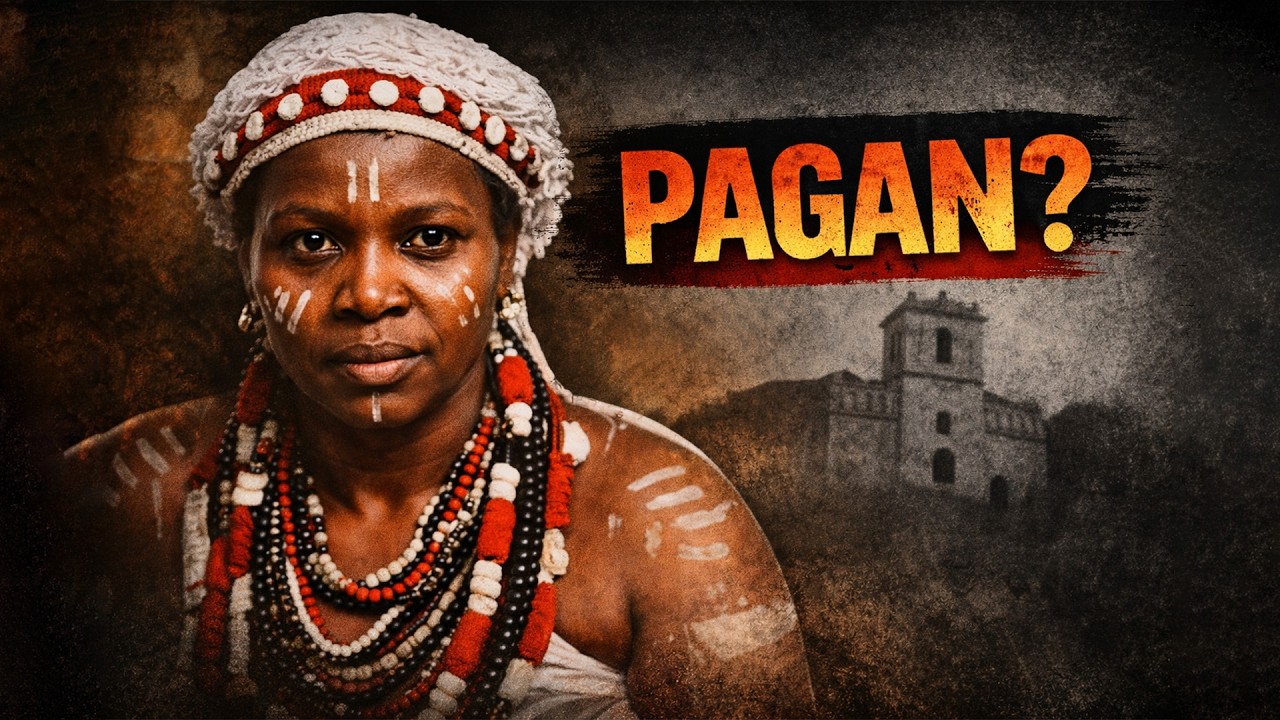
For the first production of a new year, Twum Dufe Gabriel leaves the road behind and sits down in a quiet corner of the University of Ghana. His subject is spirituality: what Ghanaians believed before Christianity and Islam became common, how those beliefs shaped family and leadership, and whether the old labels attached to them were ever fair. His guest at the Institute of African Studies is Matthew, a Master of Philosophy student in African studies who specialises in African traditional religions and who has also completed four years of seminary training for the Presbyterian ministry.
It is an unusual combination, and it gives the conversation its character. Matthew speaks as a Christian, as a researcher and as a member of a family that still pours libation.
Church in the morning, shrine in the afternoon
Matthew tells Gabriel that he grew up in a community that was predominantly Christian but where traditional practice was never far away. As a boy, he says, he watched people go to church and then on to the shrine. A local deity was celebrated every year, and churchgoers joined its devotees for the festivities before returning to their pews. The church did not approve, he recalls, but it was simply how people lived.
Gabriel recognises the picture. In Ouidah, in the Republic of Benin, he had visited the python temple that stands directly opposite the Catholic church, and was told that people attend Mass in the morning and practise Vodun in the afternoon.
For Matthew, this is not confusion but a clue to the nature of traditional religion itself. It is, he argues, deeply hospitable. It accepts gods from elsewhere as long as they do not confront its own, and that openness is the reason Islam and Christianity were able to take root on the continent at all. It is also why many converts have found it so hard, in his words, to divorce themselves from their roots.
A ladder of belief
Asked how Ghanaians practised their faith before the arrival of the missionary religions, Matthew sets out a structure that he says runs through traditional societies across Africa. At the top is a Supreme Being, known by a different name in each language; he cites the Akan, the Ewe and the Yoruba among his examples. Below the Supreme Being are the ancestors, who are understood to have become spirits and to mediate between the living and the dead. Then come the lesser deities, each with its own role. After them are totems: animals, mountains and trees that serve as mediums of spiritual function. At the base lie mystical powers such as magic and sorcery.
Because this pattern recurs among the Akan, the Yoruba, the Ewe and others, some scholars describe African traditional religion as a single, monolithic system. Others, Matthew explains, insist that it is plural, because the rituals, ceremonies and customs through which those beliefs are lived differ greatly from one people to the next. He returns to this point repeatedly: no one cultural context can be used to explain all of Africa.
Gabriel, who studied science, admits that he grew up thinking of magic as coin tricks. Matthew replies that in traditional thought magic and sorcery are distinct things, each with its own rituals, and that both are understood as ways of reaching knowledge not available to the ordinary senses. Some of these traditions, he adds, have been written down in books. He places them under metaphysics, a philosophical term which he glosses simply as that which lies beyond the physical. People believe such powers can be used to improve a life or to make it harder.
The discussion turns to masquerades. Gabriel describes the moving, cone-like figure he has filmed in Benin and in Badagry, Nigeria, which attendants overturn to show that no one is inside. Matthew would not call that magic. He classes masquerades with the lesser deities and describes them as human beings periodically possessed by spirits for a particular purpose, while allowing that ritual may make it possible for an object to move with nobody inside. He notes that Africa also has rainmakers, even though God is held to be the giver of rain. Again he cautions that masquerades mean different things in different places; in some they are entertainers. Gabriel observes that the people of Badagry and southern Benin are related to the Ewe of Ghana's Volta Region and Togo, and Matthew agrees that where a people is the same, the ideas may well be shared.
Elders, ancestors and the making of leaders
Traditional religion, Matthew says, cannot be separated from the communal shape of African society. Grandfathers, fathers and uncles lived together in one community, and the oldest person led the family. Above the family head stood the clan head. The word ancestor did not apply only to the dead. Very old people who were still alive could be regarded as ancestors too, and they stood at the front of the leadership.
Not every elder qualified. A person had to have lived a life worthy of emulation, and the standard varied. In some communities, Matthew explains, one's hands had to be free of blood; in others, one had to have led people to war and won. Young people knew the rules of their own community and shaped their behaviour in the hope of one day being counted among the ancestors.
Kingship, too, was not uniform. According to Matthew, the Ga and the Dangme originally had no chiefs. They were led by priests, who performed the rituals and guided the community. Chieftaincy came later, borrowed from neighbours through trade, conquest and cultural blending.
Asked whether he himself believes in ancestors, Matthew says he does. His is a royal family, and when it gathers for meetings the ancestors are called by name, offered drink and invited to sit in and lend their wisdom, though the family is Christian.
He illustrates how knowledge passed between generations with a story. Arriving a day late for a family funeral, he asked an old man to lead him in to greet the elders. The man sent him to buy schnapps and told him to watch closely so that he could do it himself next time, then presented him through the chief's linguist with the proper words of apology and thanks. That, Matthew says, is how the basket weaver, the kente weaver and the farmer taught their children: by letting them watch.
How the label was made
When Gabriel asks how the newcomers treated the religion they found, Matthew names three writers. Robert Moffat, a nineteenth-century missionary in southern Africa, held that Satan had erased every trace of religion from the African mind. Leo Frobenius, a German explorer, recalled reading before his travels that Africans had no political organisation before Islam. A. B. Ellis, who wrote about the Akan of the Gold Coast, thought the idea of a Supreme God had been imported by Arabs and Europeans. Matthew rejects all three positions, pointing out that African languages had names for the Supreme Being long before Europeans arrived. Some called the religion pagan, he says.
But it's not.
In his view, the dismissal served a purpose. To justify governing Africans, he argues, colonisers needed to show that there was no religion, no system of knowledge and no civilisation to displace, even though places such as Egypt and Ethiopia had long been highly developed. He adds that Christianity was not originally a European religion: it flourished in the Middle East and in North Africa and Ethiopia before reaching much of Europe, and came to the coast of West Africa with missionaries from about the fifteenth century.
A quiet blending
Today, Matthew says, most African believers are syncretic, combining faiths. Only a few are Christians, Muslims or traditionalists in a pure sense. He says there are pastors, church elders and Muslims who visit shrines when life becomes difficult, though they now do so discreetly; in his childhood it was more open. He does not regard the shrine as empty. People go, he reasons, because it works for them.
Gabriel raises the funeral rites of the late Asantehemaa, the queen mother of Asante, at which Muslim and Christian clergy prayed alongside traditional observances, to criticism from some on each side. Matthew answers that Ghana is nonetheless highly tolerant. He credits schooling, where the Religious and Moral Education syllabus covers traditional religion, Christianity and Islam together, but gives most credit to the traditional religions, the custodians of the land that made way for the others.
He suggests that training explains why Catholic, Presbyterian, Methodist and Anglican clergy are often more at ease with culture than Pentecostal and charismatic churches: his own seminary course included African traditional religions. A person can be an African Christian, he says, without adopting another people's culture. He makes a similar argument about Islam, holding that it reached Ghana from about the thirteenth and fourteenth centuries through trade in gold and kola, and that this peaceful route helps explain the country's calm. He contrasts this with northern Nigeria, where he says the faith spread partly through conquest; this is his reading of a complex history.
What to keep, what to leave behind
Matthew does not defend everything. He names human sacrifice, female genital mutilation and trokosi, the practice of sending girls to serve at shrines, as things that belong in the past. The last is personal. One of his grandmothers, he recounts, was sent to a shrine for about seven years because deaths in the family were attributed to an offence, and a virgin daughter was required. She bore the priest a son. The deaths were said to have stopped, but she spoke of the experience with pain until she died.
Against these he sets what he calls the progressive elements: festivals, naming ceremonies, systems of marriage and the idea of family. He speaks warmly of the puberty rites and the annual festival of his mother's Dangme people, the Krobo, which he says commemorates their descent from Krobo Mountain after a colonial governor, suspecting human sacrifice, drove them down to the plains. No festival is better than another, he adds; each people should value its own.
African religion is not demonic.
His closing appeal, directed in part at Gabriel's many viewers in the diaspora, is practical. Take children to their hometowns. Let them experience the festivals. Build a curriculum that teaches traditional religion, modernise what can be improved, and remove what harms. Understanding, he says, is what makes people accommodating, and it is how Ghana's tolerance will last.
Prefer to watch? This article is based on a Journey documentary. Watch the video →
More in Culture & Traditions
Culture & Traditions
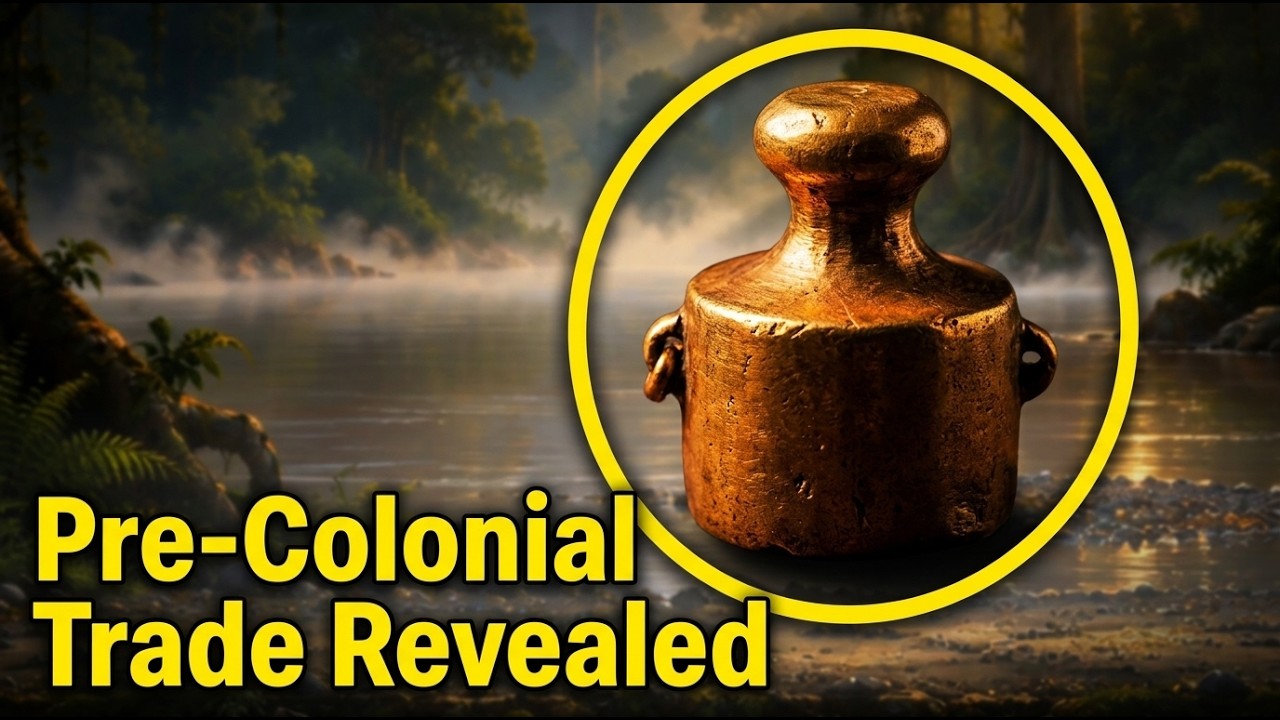
A True Weight: Akan Gold, Brass Scales and the Coming of the Portuguese
Through the story of a young brass caster, The Journey retells how the Akan weighed their gold with exact brass weights, and how that honest scale…

Culture & Traditions
Queens of the Cloth Trade: The Nana Benz of Togo
In a Lomé museum, Twum Dufe Gabriel meets the cloth traders remembered as the Nana Benz, hears a Togolese account of kente, and finds a fabric…

Culture & Traditions
Between Sea and Lagoon: The People of Keta and the Words They Carry
At Fort Prinzenstein, a Keta historian traces Anlo-Ewe identity through borrowed Danish words, a migration tradition from Notsie, and borders that…
Discussion 0
No comments yet. Be the first to share a thought.
Join the conversation. Members can comment on every article, video and photo without leaving the site.
Join free Sign in