At the Palais de Lomé, a Guide Retells Togo's Story From Migration to Independence
On his first visit to Togo, Twum Dufe Gabriel walks the grounds of a restored colonial palace in Lomé and hears one guide's account of partition, Sylvanus Olympio, migration and the slave trade.
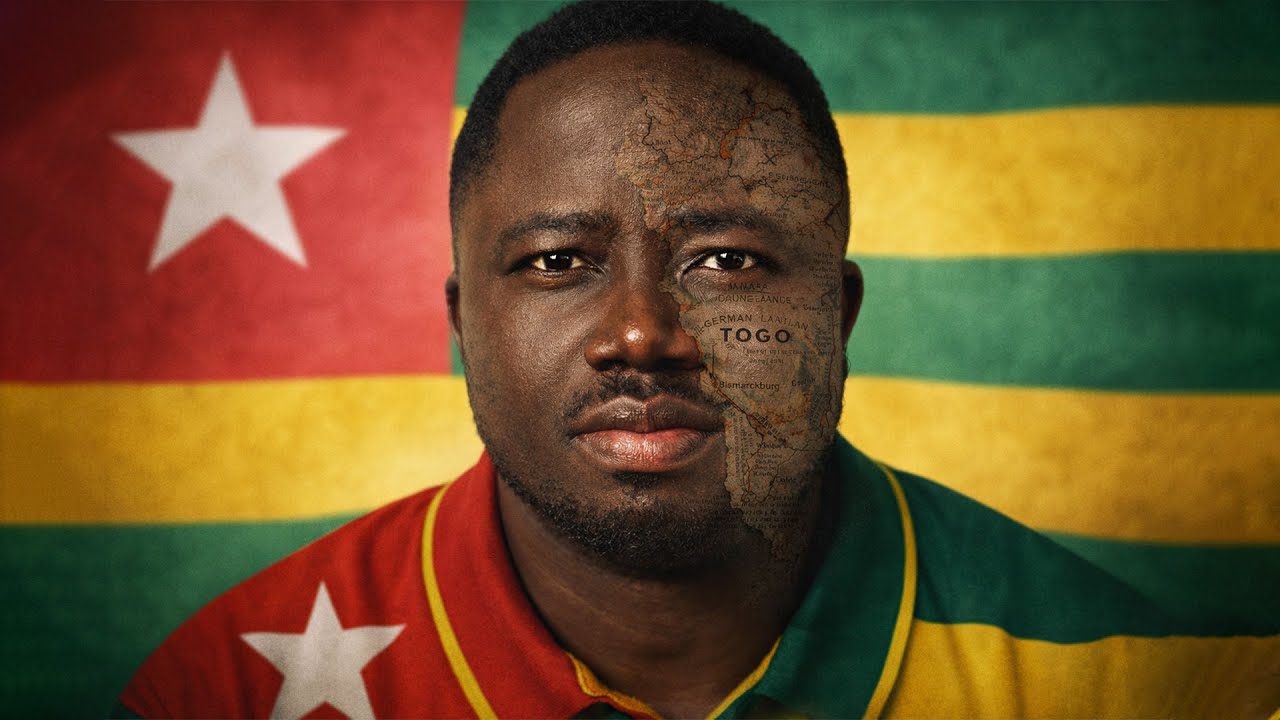
Twum Dufe Gabriel has spent much of his journey tracing history along the West African coast, through Ghana, Benin and on to Badagry in Nigeria. In this episode he crosses into Togo for the first time and goes to the Palais de Lomé, a restored colonial building that now serves as a museum. He is met there by a guide, who greets him with a joke: having arrived, he is no longer Ghanaian but Togolese. The questions, the guide adds, are his to ask.
Gabriel begins with the ground beneath his feet. Why does this place matter, and why should anyone come here to learn about Togo?
A palace that changed hands
The guide calls the building a concentrate of Togolese history. It was built, he says, between 1898 and 1905, some 120 years ago, when Togo was a German colony, and its architect was one of the German governors. After Germany's defeat in the First World War the territory was occupied by Britain and France, and both administrations worked from the building. In those days, the guide says, people spoke not of Togo but of the place of the double flag, because the British and French flags flew together above the roof.
Then came partition. In the guide's telling, the country was split into three: one part was joined to Ghana by the British, forming what is now the Volta Region; a second was negotiated by the French and joined to Benin; and the third is the Togo of today. He places the decision in Berlin. The established record describes a two-way division of German Togoland into British and French mandates after the First World War, with the British portion joining Ghana in the 1950s, so the guide's three-way account and its Berlin setting differ from the usual version.
Gabriel's response is sympathetic. The Togolese, he tells his host, have been through a great deal.
Olympio and the currency question
What the people of the remaining territory wanted, the guide continues, was independence. He says the first president, Sylvanus Olympio, stood at this building and proclaimed it, and then made the former governors' residence the first presidential palace. The gesture was deliberate: the place would no longer belong to any foreign power but to the Togolese, whose own artisans, the guide points out, had worked on its construction under a German architect.
Other presidents followed Olympio into the building, among them Nicolas Grunitzky and Gnassingbé Eyadéma. According to the guide, Eyadéma later chose to build a new presidential palace nearby, in answer to the criticism that the old one had been built by outsiders, to their design and with their budget. The new palace was to be made by Togolese hands throughout. The older building became a residence for distinguished guests and later the prime minister's office. After a period of political trouble it stood abandoned for more than twenty years. Renovation began in 2014 and ended in 2019, and since then it has been a home for art, exhibitions and cultural events.
Gabriel draws a comparison with Ghana, where Kwame Nkrumah led the country to independence, was overthrown and died in exile. Was Togo's story similar? The guide's answer is stark. Olympio, he says, was the first African president to be assassinated, and he gives the reason without hesitation: Olympio wanted to leave the CFA franc zone and give Togo a currency of its own.
By the guide's account, the new money had already been printed and was sitting in the banks. On 13 January 1963 Olympio was due to sign an agreement with France that would complete the withdrawal, and he was killed that morning, before the signing could take place. Gabriel likens the ambition to Ghana's move from British colonial money to the cedi. The guide agrees, and says that Olympio and Nkrumah, though they differed on some points, shared a dream of a united Africa trading in its own currency, perhaps even a single African one. The assassination and its date are a matter of record; the motive is presented here as the guide gives it.
Roads from the east
Gabriel then turns to the time before colonisation. In his travels he has heard the Ewe trace their migration from Nigeria westward, and he asks how the Ewe of Togo tell the story.
The same way, the guide says, and he begins further back still. According to the tradition he relates, the peoples of this coast came from Egypt, which is why their cultures and traditional beliefs resemble one another. They travelled along the Nile and divided as they went: those who were tired stopped and founded villages, while the stronger continued, pressed onward, he says, by slave raiding in North Africa. They passed through Niger and Nigeria, some settling there and others moving on to Benin, Togo, Ghana and Côte d'Ivoire. The migrants carried royal thrones with them, he adds, as proof of legitimate descent.
Some reached Ghana and found other peoples already settled. Living side by side did not go smoothly, the guide says, and rather than face constant conflict, groups moved again and put distance between themselves and their neighbours. That, in his account, is how the Ewe and the Guin came to be separate, and why the Guin of the Aného area in Togo and the Ga of Ghana are, as he puts it, the same people under slightly different names.
The link is renewed every year. Gabriel describes Homowo, the Ga festival in Ghana at which a corn-flour dish is prepared and sprinkled. The guide says the Guin gather in the same spirit to open their new year, which falls around September because, he explains, the traditional calendar has thirteen months and not twelve. A corn dish he calls yakayake is eaten, people dress in white, and visitors arrive from Ghana, Benin, Nigeria, Côte d'Ivoire, Brazil and the diaspora in Europe.
Kings before and after
Asked how authority was organised before colonial rule, the guide describes a land of many kingdoms, each zone with its own king and each knowing where its borders began and ended. Between them, he says, there were peaceful understandings: a traveller could go north to buy the goods for which northern craftsmen were known and return unharmed.
Above these rulers, he says, stood a supreme king, and the office survives. Togo still has a figure he calls the king of kings, distinct from the president and the prime minister and respected in both north and south. He cannot recall the name on the spot. Gabriel says he would like to be taken to the palace one day.
The slave trade, coast and north
The conversation ends on the hardest subject. Gabriel recalls what he has learned elsewhere: the women warriors of Dahomey, a people of northern Ghana who killed slave raiders and still hold a festival to remember it, and other communities that took part in the trade. Togo's experience was just as divided, the guide says. Some resisted and some continued. He names Aného as a base for slave traders, where the business went on long after Britain declared abolition, which he associates with Queen Victoria.
He describes the methods as he understands them. Promising children were taken to Europe to be educated and came home feeling apart from their own communities; children of mixed parentage were raised in the same way; and others were drawn in by promises he compares to a modern visa and a dream of life abroad. Many were simply taken by force. He also relates the tradition that captives were given a ritual bath meant to make them forget their past and lose the spiritual power inherited from their ancestors, a belief Gabriel recognises from Benin. The guide is careful to say that he was not there and cannot know exactly how it was done.
In the north, he says, communities built houses hidden in the mountains, stored food there in peacetime and kept a lookout on the heights. When raiders approached, a signal sent families into the rock until the danger had passed.
Gabriel admits the pattern saddens him: along the whole coast, it seems, southerners sold people while northerners fought. The guide asks him to consider the position of those who met the ships first. The coast was struck without warning, he says, by strangers its people took for traders, and it suffered killing and violence before anyone could organise a defence. News then travelled north along the food-trading routes, and the north had time to prepare. Gabriel puts the point about the coast in his own words, and the guide agrees.
They don't have time to prepare.
It is a reading of the past that replaces blame with circumstance, and Gabriel accepts it. He leaves the palace grounds with a fuller picture of a neighbour whose history, as the guide has told it, runs closely alongside Ghana's own.
Prefer to watch? This article is based on a Journey documentary. Watch the video →
More in Colonial Era
Colonial Era
Beneath the Lake: Krachi's Drowned Slave Market and the Memory of German Rule
In Kete-Krachi, a chief who grew up in the old town points across the Volta Lake to where a slave market once stood, and recalls what his elders said…
Colonial Era
On Forbidden Ground: Kwame Nkrumah and the End of Colonial Rule in Ghana
At the Kwame Nkrumah Memorial Park in Accra, a guide walks Twum Dufe Gabriel through the life, the overthrow and the three burials of the man who…
Colonial Era
Cross and Crown: The Church, the Colonial State and the Cathedral at Navrongo
In conversation with a researcher friend, Twum Dufe Gabriel weighs how far Christian missions shared in slavery and colonial rule, through the story…
Discussion 0
No comments yet. Be the first to share a thought.
Join the conversation. Members can comment on every article, video and photo without leaving the site.
Join free Sign in